Operating -
Tank wash system
Tank washing system
|
The optional tank wash system
allows the tank and spray lines to be rinsed out and the washings
disposed of in the field.
If you are changing chemicals and
crops, and there is a potential danger of crop damage being caused by
the tank not being thoroughly cleaned, then it is recommended that a
further full wash is carried out with a cleaning agent by
conventional methods afterwards. |
|
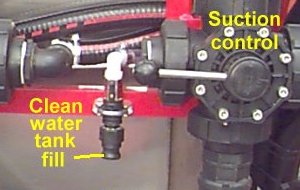
The clean water tank holds 10% of
the main tank volume. To fill the clean water tank, connect a hose to
the small valve in between the main control valves. Only clean
water should be used.
Recommended washing procedure
The following procedure is
recommended to ensure that your crops are not overdosed and you end
up with a relatively clean sprayer using the minimum amount of water
and, of course, minimising the possibilities of any pollution.
When you spray a field in which you
know you are going to use the tankwash afterwards, the area of the
field where you intend to spray the washings should be under-dosed by
approximately 15%. The area required can be calculated as follows:
½ wash tank volume ÷
Application rate (l/ha) e.g. 75 ÷ 200 l/ha = 0.375 hectares.
The easiest way to achieve this to
increase your speed by 15%. e.g. from 10 to 11.5 kph. Choose a smooth
area of the field and before setting off reset the trip area meter on
the RDS. You can then simply watch the area meter until you have
covered the required area and then slow down again. If you have a
variable speed PTO you will need to set it in constant mode. If you
have an automatic rate controller you will need to alter either the
application rate programmed into the unit or switch it into manual mode.
Washing the tank
1. As you finish
spraying, empty the tank of as much chemical as possible and switch off.
2. Turn the main
sprayer pressure control valve to the tank
wash position. and the main suction valve to the clean water
position. (see below)
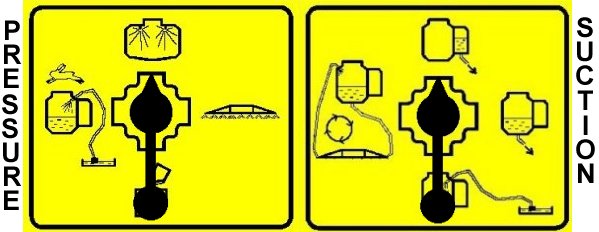
Valve positions for tank washing