Operating - Hyraulic PTO
Hydraulic PTO system
For information on
the optional high power PTO system (Airtec) or non standard hydraulic
systems please see appendices.
Safety
-
Ensure PTO is disengaged before starting engine.
- The engine MUST be switched off before connecting the PTO or making any adjustments.
Operation
The PTO is
hydraulically driven, is fully independent and may therefore be
engaged at any time providing the engine revs are not too high. To
engage the PTO press the PTO switch on the hydraulic control panel
down. A lamp built into the switch will illuminate whilst it is
switched on.
Hydraulic
control panel
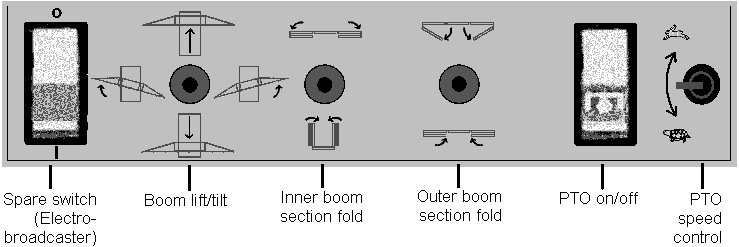
Setting PTO speed
The hydraulic pump
is geared so that 540 r.p.m. on the PTO is reached at a minimum
engine speed of 1600 rpm. To set the PTO for 540, or indeed any other
required speed, increase the engine speed to approx. 2000 rpm and
adjust the speed with the knob adjacent to PTO switch. NB The knob
must be lifted before turning to unlock it and pushed back in afterwards.
The actual PTO speed can be read off the LH display of the ICM (see
previous pages). Turning the knob anti-clockwise will increase the
speed and clockwise will decrease the speed.
Once the speed is
set, if the engine rpm is increased there will not be a significant
increase in PTO speed. The PTO speed should never exceed 600 rpm For
most spraying operations you will find it is not necessary to always
run the PTO at 540 rpm. Lower PTO speeds result in reduced wear and
tear in the spray pump and hydraulic system, a lower engine power
requirement and can help to prevent foaming in the spray tank.
If the sprayer is
fitted with a high capacity spray pump e.g. 4, 5 or 6 cyl. the PTO
speed should be set as low as possible whilst spraying. Speeds in the
order of 350 rpm for a 6 cyl. pump and 450 rpm for a 4 cyl. pump are
normally more than adequate to achieve working pressure with excess
flow left for agitation. Higher speeds may result in overheating of
the hydraulic system. The PTO speed can then be increased to 540
after each load for quick-filling if required.
It is important to
ensure that sprayer filters are kept clean and that self-cleaning
filters are working correctly at all times. Failure to do so will
result in loss of PTO speed and overheating of the hydraulic system.